Dermatology · Rosacea
Calm the redness, quiet the flare
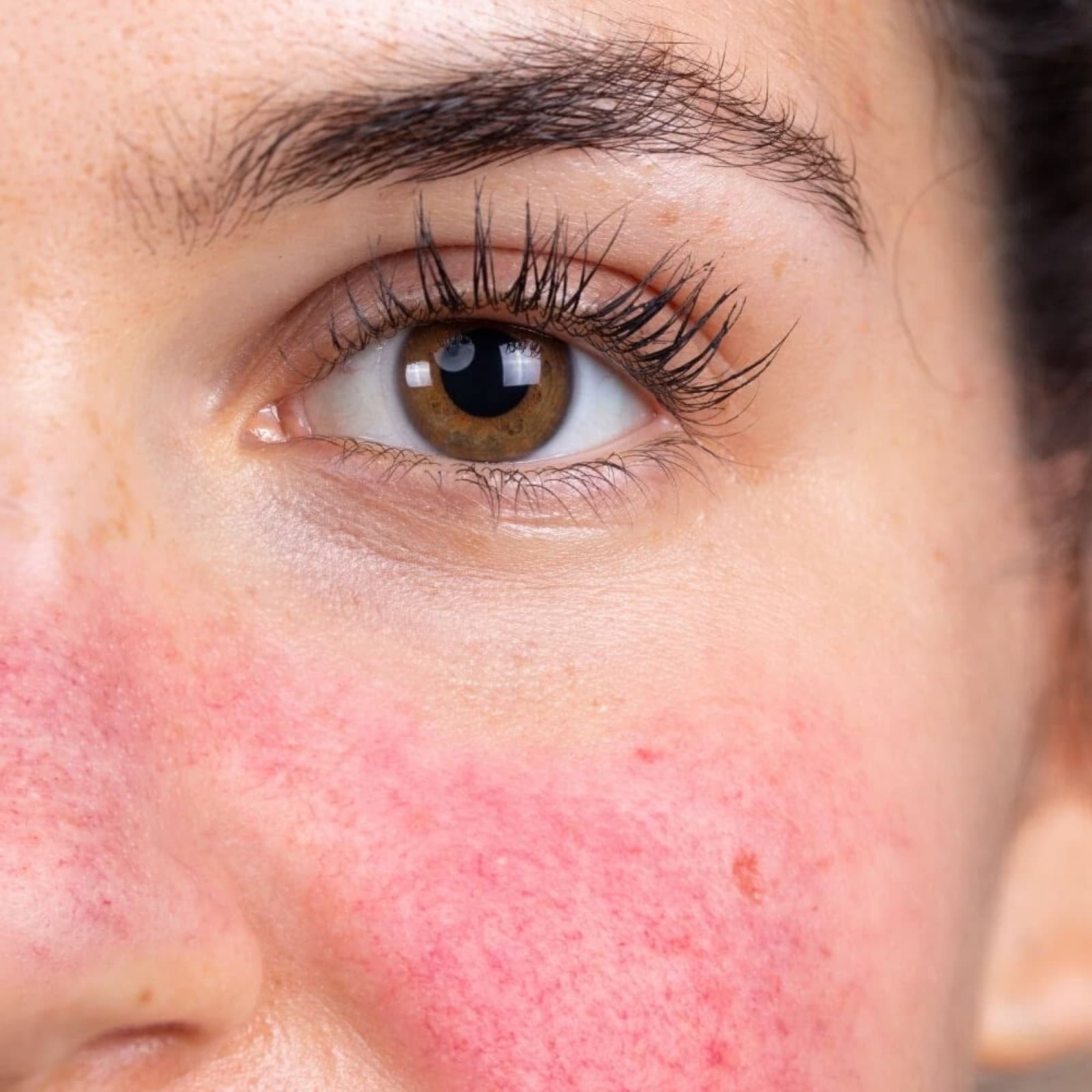
Rosacea — persistent facial redness, flushing, visible vessels and sometimes acne-like bumps across the cheeks and nose — is common, harmless and very manageable. It can't be cured, but with the right diagnosis, trigger awareness and professor-led treatment, it can be brought under lasting control.
What it is
More than a rosy complexion
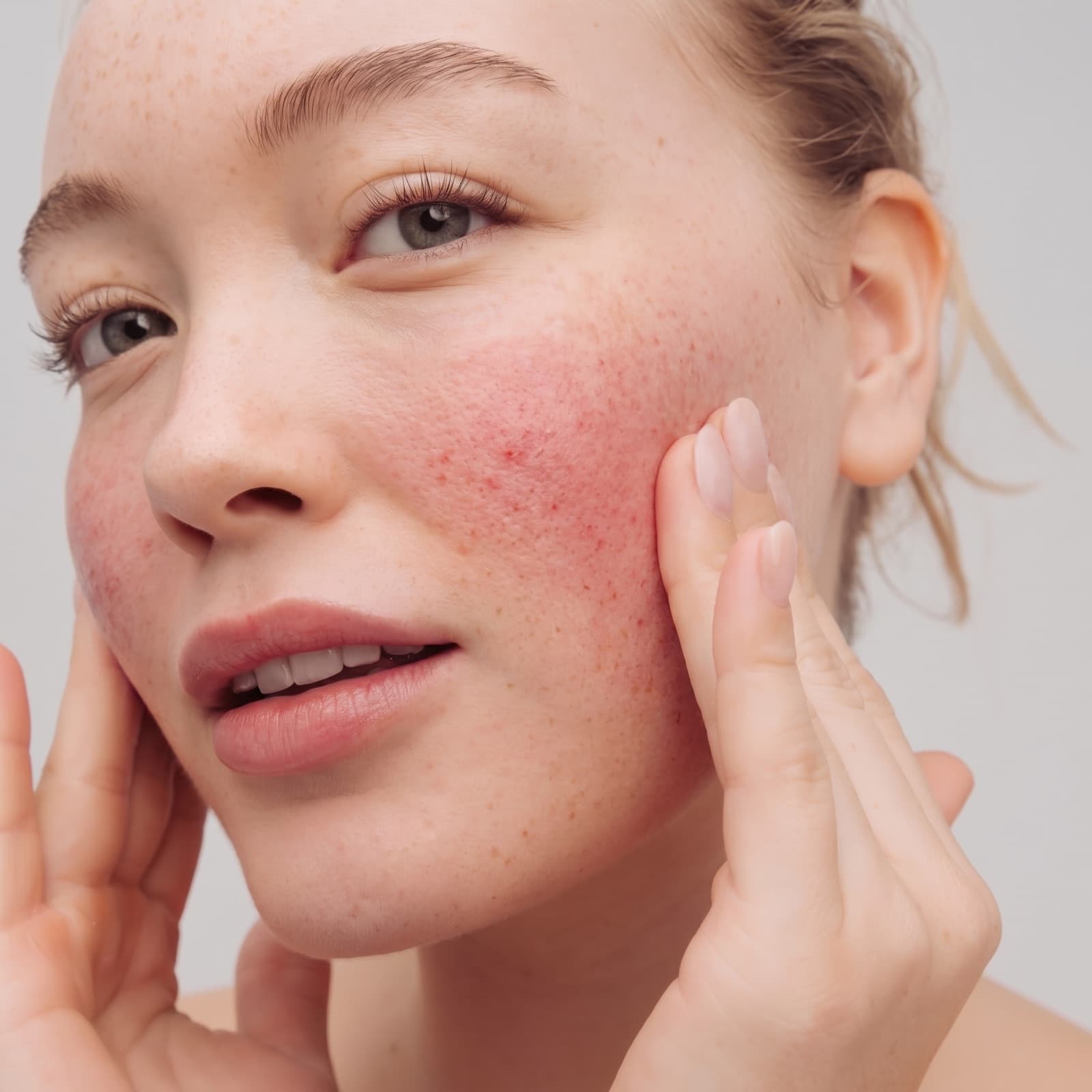
Rosacea is a long-term inflammatory skin condition that mainly affects the central face — the cheeks, nose, chin and forehead. It starts as flushing and persistent redness, and can progress to visible blood vessels, acne-like bumps and, in some people, thickened skin or irritated eyes.
It's most common in fair-skinned adults from their thirties onwards, and it tends to come and go in flares. It isn't caused by poor hygiene or by anything you've done — it's how your skin and blood vessels react. And while it can't be cured, it responds genuinely well to the right treatment and a little trigger know-how.
Settling the inflammation — and keeping the flares away.
Types of rosacea, explained
Four faces of the same condition
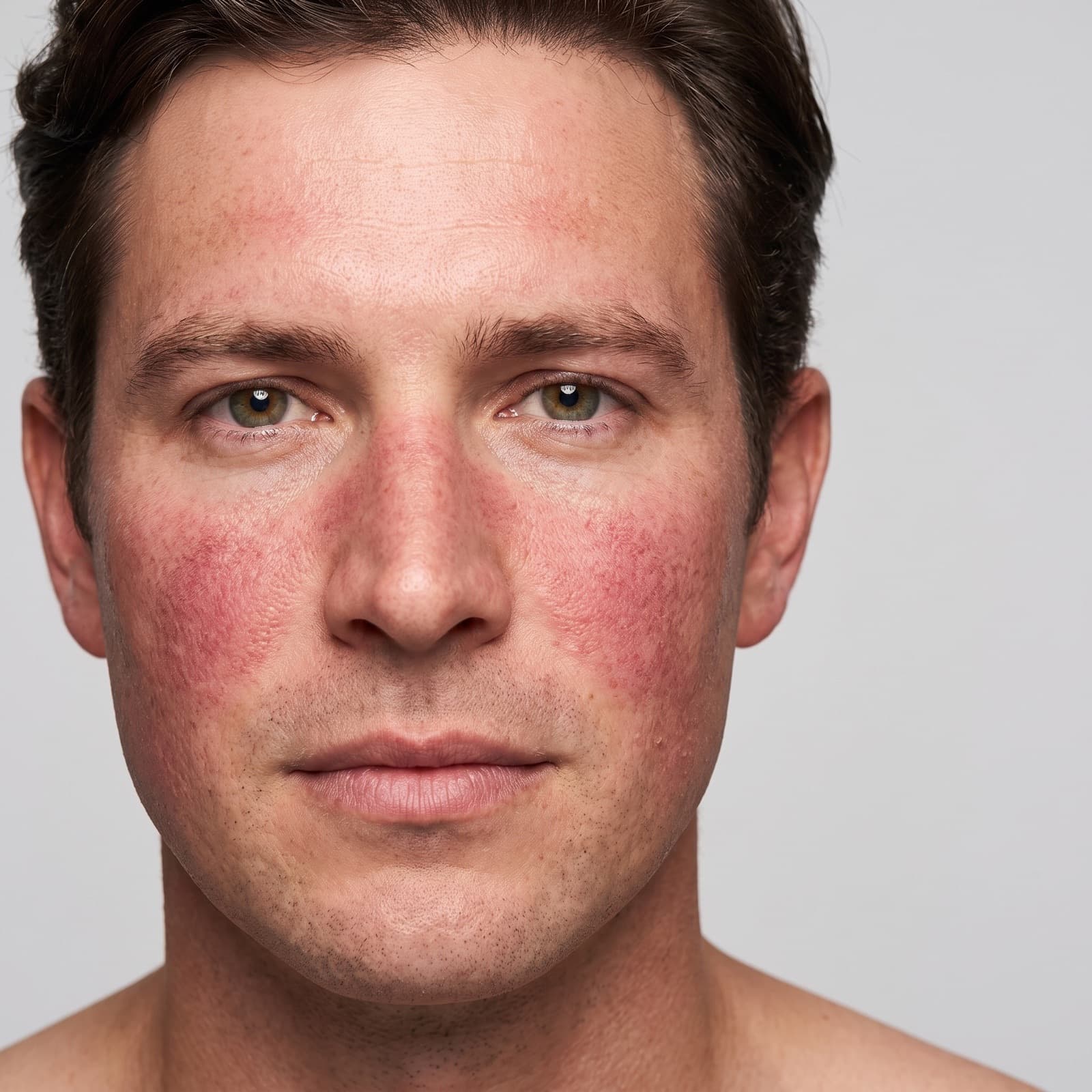
Rosacea shows up in different ways — and many people have features of more than one type at once. Recognising which you have is key to treating it well.
Redness & flushing
Erythematotelangiectatic
Persistent redness across the central face, easy flushing and often visible small blood vessels. Skin may sting, burn or feel sensitive.
Bumps & pustules
Papulopustular
Redness with acne-like papules and pustules — sometimes mistaken for acne, but without blackheads. Comes in flares.
Skin thickening
Phymatous
Less common — skin thickens and becomes bumpy, most often on the nose (rhinophyma). More frequent in men, and very treatable.
Eye involvement
Ocular rosacea
Dry, gritty, red or irritated eyes and lids. It can occur with or without skin symptoms and shouldn't be overlooked.
Often overlapping. Most people don't fit neatly into one box — you might have redness and bumps together, or skin symptoms alongside eye irritation. Your specialist treats your particular mix, and adjusts as it changes over time.
Causes & triggers
Why rosacea flares
Rosacea comes from how your skin is built — but everyday triggers are what set off the flushing and flares. Knowing yours is half the battle.
Genetics & skin type
Rosacea runs in families and is most common in fair skin that flushes easily. It reflects how your blood vessels and immune system are wired.
Overactive blood vessels
Facial vessels dilate too readily and stay dilated, driving the flushing and persistent redness at the heart of rosacea.
Immune & inflammation
An overactive inflammatory response — sometimes linked to Demodex skin mites — fuels the bumps, pustules and sensitivity.
Trigger sensitivity
Skin over-reacts to everyday triggers — heat, sun, spice, alcohol, stress — setting off the flares rosacea is known for.
Common flare triggers
Triggers are personal — part of our care is helping you find and manage yours, often with a simple flare diary.
Treatment options
A calm, tailored approach
Rosacea treatment is about control, not cure — matching gentle, effective options to your type and triggers, and adjusting as your skin settles.
Gentle skincare & sun protection
A calming, fragrance-free routine and daily SPF — the base of every rosacea plan, reducing sensitivity and flare frequency.
Topical treatments
Prescription gels and creams — such as metronidazole, azelaic acid and ivermectin — that calm redness, bumps and inflammation.
Oral medication
For more active or bumpy rosacea, low-dose oral courses settle inflammation and bring flares under control.
Laser & light (IPL)
Targeted laser or intense pulsed light to reduce persistent redness and visible blood vessels that creams can't reach.
Eye (ocular) care
Lid hygiene, drops and specific treatment where rosacea affects the eyes — an often-missed but very treatable part.
Trigger & maintenance plan
Identifying your personal triggers and a long-term routine to keep skin calm and flares few and far between.
Why see a specialist
Rosacea needs the right diagnosis
Because it mimics other conditions and reacts badly to the wrong products, rosacea is one to get properly assessed rather than self-treated.
It's often misdiagnosed
Rosacea is easily mistaken for acne, allergy or simple sensitivity — and treated with the wrong things. Accurate diagnosis is where good care begins.
The wrong products worsen it
Many over-the-counter and 'anti-redness' products irritate rosacea-prone skin. A specialist steers you to what calms rather than inflames.
A plan for your type
Redness, bumps, vessels and eye symptoms each need different treatment. Professor-led care tailors the mix to exactly what you have.
Lasting control
With the right treatment and trigger management, most people see real, sustained improvement — fewer flares and calmer skin day to day.
Myths vs facts
Clearing up the confusion
Rosacea is widely misunderstood — and the myths can be hurtful as well as unhelpful. Here's what's actually true.
Rosacea is just having rosy cheeks
It's a genuine inflammatory skin condition that can progress — from flushing to persistent redness, bumps, visible vessels and eye symptoms — and benefits from real treatment.
It's caused by poor hygiene
Not at all. Rosacea is about genetics, blood vessels and inflammation — nothing to do with cleanliness. Over-washing actually makes it worse.
Rosacea is a type of acne
They can look similar and even overlap, but rosacea has no blackheads and is driven differently. Treating it like ordinary acne often backfires.
Only heavy drinkers get it
A harmful myth. Anyone can have rosacea; alcohol can trigger a flare but doesn't cause the condition. Plenty of people who rarely drink have it.
There's nothing you can do about it
There's a lot you can do. It can't be cured, but treatment and trigger management bring most people real, lasting improvement.
Sunscreen isn't necessary
Sun is one of the biggest rosacea triggers. Daily, gentle sun protection is one of the most effective things you can do to reduce flares.
What to expect
A clear path to calmer skin
Rosacea settles gradually with the right plan — and staying ahead of your triggers keeps the improvement going.
Consultation
A careful assessment to confirm it's rosacea, identify your type(s) and understand your flares, triggers and any eye symptoms.
Your plan
A personalised plan — gentle skincare, topical or oral treatment and any in-clinic options — with realistic expectations set from the start.
Treatment
Settling active inflammation and redness, with guidance on a calming routine and how to manage your triggers day to day.
Review & maintain
Reviewing progress and fine-tuning, then a long-term maintenance plan to keep flares infrequent and skin calm.

Your specialist
Prof. Dr. Milos Pavlovic
Our Professor of Dermatology brings deep expertise to rosacea — accurately diagnosing its type, calming inflammation and redness with the gentlest effective treatment, and building a long-term plan around your triggers. Expert care to bring calm, lasting control.
Good to know
Rosacea, answered
Calmer, more comfortable skin
Book a rosacea consultation
Persistent redness, flushing or bumps you'd like to bring under control? Book online or message us and we'll build the right plan for your skin.