
Peer reviewed by Dr. Rania Ayat Hawayek, Medical Director and Pediatrician
For most parents, childhood vaccinations are one of the first big health decisions they make for their baby, and one of the most common questions is simply: what does my child need, and when? In the UAE, vaccinations follow a national immunization schedule that protects children against a range of serious infectious diseases from birth through adolescence.
This guide explains how childhood vaccinations work in the UAE, what the national schedule covers, what to expect at a vaccination visit, and how to keep your child’s records in order for school and travel. It is written to help parents in Dubai feel informed and confident, whether you are starting out with a newborn or catching up after a move.
How Childhood Vaccinations Work in the UAE
Vaccines work by safely training your child’s immune system to recognize and fight specific infections before they are ever exposed to the real disease. The vaccine introduces a harmless component of a germ, and the immune system responds by building protection. If your child later encounters that germ, their body is already prepared.
The UAE runs a National Immunization Program, overseen at the federal level by the Ministry of Health and Prevention, with the Dubai Health Authority and Department of Health Abu Dhabi applying it locally. The program provides protection against a range of vaccine-preventable diseases and has maintained high coverage across the country. The schedule is reviewed and updated periodically as new vaccines become available, so the most reliable source for the current version is always your pediatrician or the relevant UAE health authority.
Circle Care Clinic’s pediatric team in Dubai provides childhood vaccinations in line with the UAE National Immunization Schedule, alongside routine well-child care, so your child’s growth, development, and immunizations can be followed together
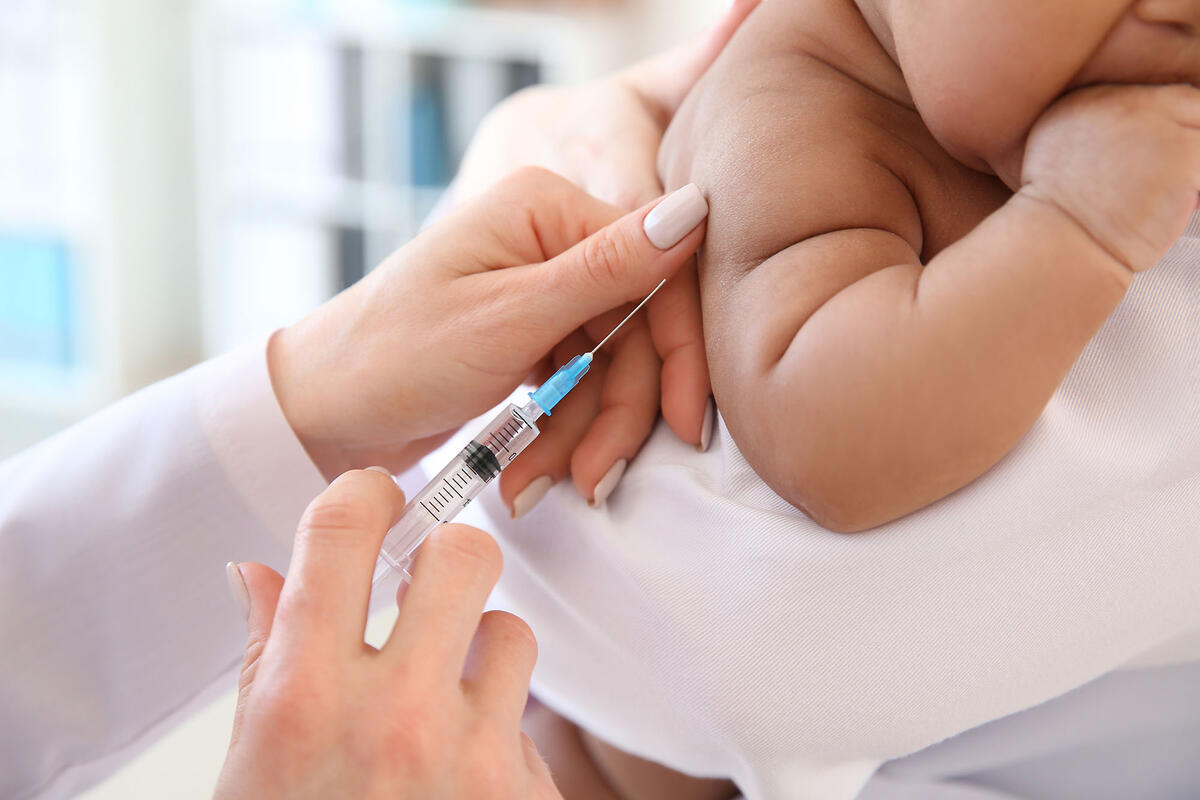
What the UAE Childhood Vaccination Schedule Covers
The UAE schedule protects children against a broad set of infectious diseases. The vaccines commonly included across infancy and childhood protect against:
- Tuberculosis (BCG)
- Hepatitis B
- Diphtheria, tetanus, and pertussis (whooping cough)
- Haemophilus influenzae type b (Hib)
- Polio
- Pneumococcal disease
- Rotavirus
- Measles, mumps, and rubella (MMR)
- Chickenpox (varicella)
The schedule begins at birth, when babies are typically offered the BCG and hepatitis B vaccines. A primary series of vaccines is then given during the first months of life, commonly at around 2, 4, and 6 months, with further doses and boosters as your child grows, including in the second year of life and again before school age. Additional protection, such as for respiratory syncytial virus (RSV), has been introduced in recent updates to the schedule.
Because the exact ages and combinations are updated from time to time, it is best to confirm the current schedule with your pediatrician rather than rely on a fixed list. Your pediatrician can also map out a personalized plan if your child has missed doses or is starting the schedule late.
What to Expect at a Vaccination Visit
Vaccination appointments are usually short and straightforward. Knowing what happens can make the visit calmer for both you and your child. A typical visit includes:
- A brief check that your child is well enough to be vaccinated that day
- A review of which vaccines are due and a chance to ask questions
- The vaccine itself, usually given as an injection, with some given by mouth
- A short period to settle afterward
- An update to your child’s vaccination record
Mild reactions are common and usually settle on their own within a day or two. These can include soreness or redness where the injection was given, a mild fever, or being more unsettled than usual. Your pediatrician will explain what is normal and how to keep your child comfortable. Serious reactions are uncommon, and your care team will advise you on what to watch for and when to seek help.
If your child is unwell with more than a mild illness on the day, the appointment may be rescheduled. A minor cold without a fever is not usually a reason to delay.
Keeping Vaccination Records in Order
In the UAE, keeping an accurate, up-to-date vaccination record matters for more than peace of mind. Vaccination records are typically required for school and nursery enrollment, and they are useful for travel and for any future medical care.
Practical tips for record-keeping:
- Keep your child’s vaccination card or digital record safe and bring it to each visit
- Ask for the record to be updated at every appointment
- Keep a backup, such as a photo of the card, in case the original is misplaced
- If you move between clinics or countries, share the full history so nothing is duplicated or missed
For families who have recently moved to Dubai, gathering scattered records from a previous country can take time. A pediatrician can review what your child has already received and recommend any catch up doses needed to align with the UAE schedule.
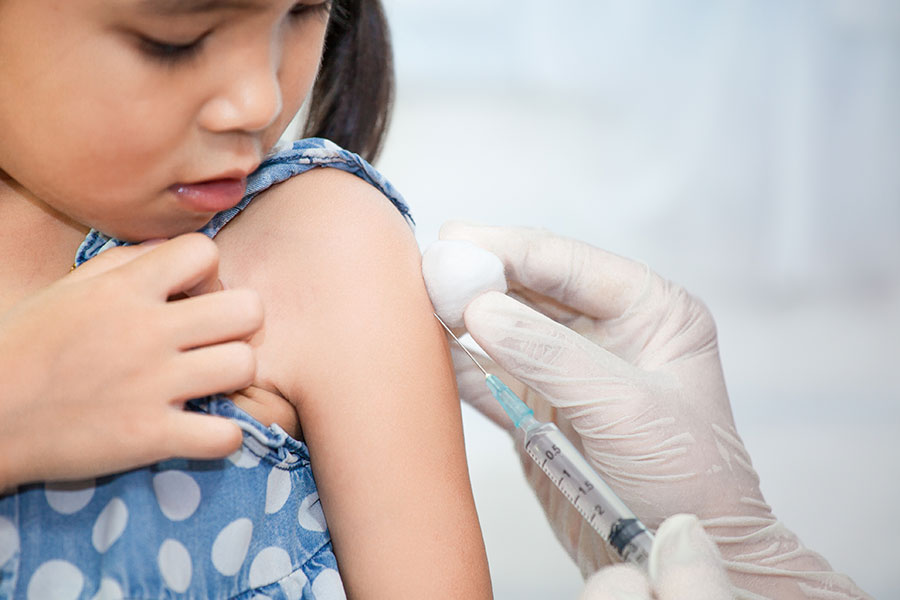
Vaccination After Moving to Dubai
Relocating with young children often raises questions about whether their existing vaccinations are recognized and what, if anything, they still need. Schedules differ between countries, so a child may be fully up to date in one system but need a few additional or repeated doses to align with the UAE program.
The practical step is to book a pediatric appointment soon after arriving, bringing whatever records you have. Your pediatrician can compare your child’s history against the UAE schedule and plan any catch up vaccinations. Establishing this early means your child is protected and their records are ready for school enrollment.
When to Speak to Your Pediatrician
Vaccination is a good moment to raise any wider questions about your child’s health. It is worth speaking to your pediatrician if:
- Your child has missed one or more scheduled vaccines
- Your child has a known allergy, a weakened immune system, or a chronic health condition
- Your child had a significant reaction to a previous vaccine
- You are unsure which vaccines your child has already received
- You have questions or concerns about any vaccine on the schedule
Your pediatrician is there to answer questions and to plan a schedule that suits your individual child. There is no such thing as a question that is too small when it comes to your child’s health.
FAQs
What are the mandatory vaccines for babies in the UAE?
The UAE National Immunization Program covers vaccines against diseases including tuberculosis, hepatitis B, diphtheria, tetanus, whooping cough, Hib, polio, pneumococcal disease, rotavirus, measles, mumps, rubella, and chickenpox. Vaccination records are typically required for school enrollment. Your pediatrician can confirm the current schedule for your child.
Is child vaccination free in the UAE?
Vaccines in the national immunization schedule are provided free of charge for children at government health facilities in the UAE. Private clinics, including Circle Care Clinic, also offer childhood vaccinations as part of pediatric care. Your pediatrician can explain the options and how appointments are arranged.
What vaccines are given during childhood?
Childhood vaccines in the UAE protect against tuberculosis, hepatitis B, diphtheria, tetanus, whooping cough, Hib, polio, pneumococcal disease, rotavirus, measles, mumps, rubella, and chickenpox, among others. They are given in a series of doses from birth through the early school years, with boosters at set ages.
What if my child has missed some vaccinations?
Missing a scheduled vaccine is common, especially after a move, and it can usually be addressed with a catch-up plan. Bring whatever records you have to a pediatric appointment, and your pediatrician will review your child’s history and recommend any doses needed to bring them up to date with the UAE schedule.
Do you accept insurance?
Circle Care Clinic operates on a pay-and-claim (reimbursement) basis and is not part of insurer networks. Patients settle their consultation at the clinic and then submit a claim to their insurer for reimbursement, depending on their policy coverage.
- Detailed, insurance-ready invoices
- Medical reports and documentation
- Guidance on completing and submitting your claim
For onward care, such as prescribed medications or diagnostic tests (e.g. laboratory or radiology services) or necessary hospital visits, these are covered via direct billing when carried out at providers within your insurer’s network. All referrals are issued by DHA-licensed doctors and include the required coding for insurance purposes.
We recommend checking your policy for outpatient reimbursement eligibility and network coverage.
Closing
Childhood vaccinations are among the most effective ways to protect your child against serious infectious diseases, and the UAE’s national schedule provides a clear, well-established framework from birth onward. Understanding what your child needs, and keeping records in order, makes the whole process simpler.
If you would like to plan your child’s vaccinations or check whether they are up to date, our pediatric team at Circle Care Clinic provides childhood vaccinations in Dubai from our three clinical locations — Al Thanya, City Walk and Dubai Science Park — alongside routine well-child care and mother and baby support for the early months. A consultation is the best way to plan a schedule that suits your child.

Written by
The Circle Care Team
Warm, Western-trained specialists across seven specialties and three Dubai locations. Our articles are written and reviewed by the Circle Care clinical team to help your whole family stay well.
Meet the team