



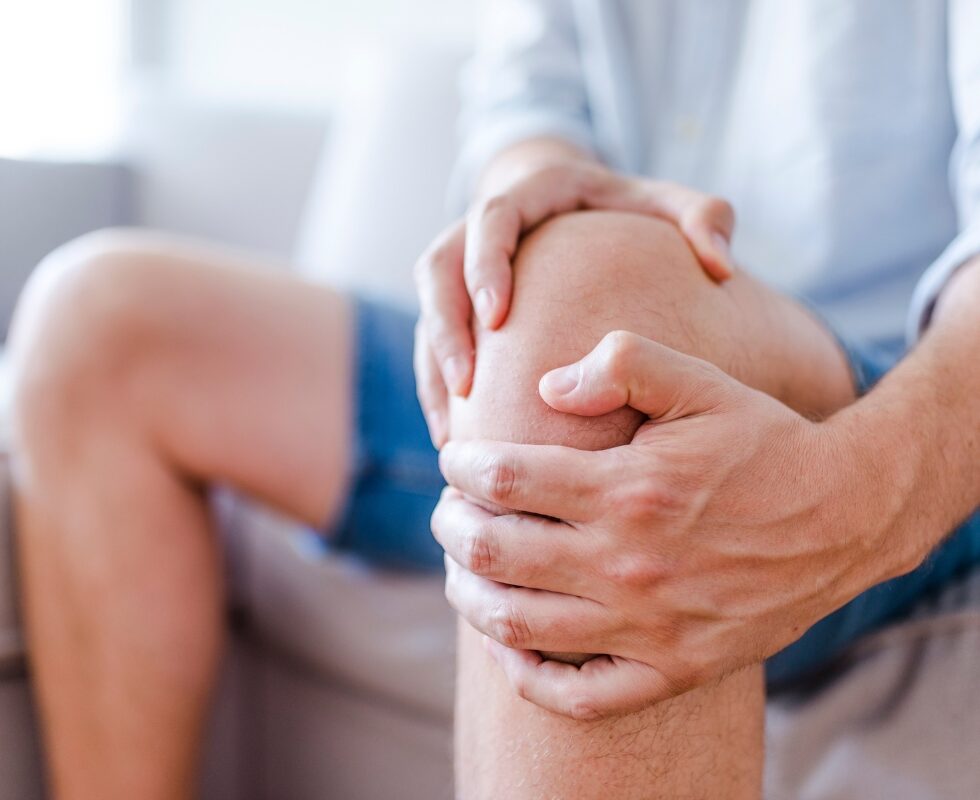
Tendinopathy is a clinical condition characterized by pain and impaired function in a tendon, most commonly resulting from repetitive mechanical overload. It frequently affects the rotator cuff, Achilles, patellar, gluteal, and elbow tendons, and is prevalent among athletes and physically active individuals, but can also occur in sedentary populations and older adults.
Circle Care Clinic and Dr. Michael Roger have extensive experience treating various types of tendinopathy. As someone who understands every tendon injury, Dr. Roger can create a customized plan tailored to your specific needs.
Learn more about our orthopedic services and how Circle Care Clinic’s team can relieve your pain
Tendinopathy Symptoms
Common tendinopathy symptoms include tendon thickening, swelling, and pain, especially during loading or movement. The etiology is multifactorial, with intrinsic factors (age, genetics, comorbidities) and extrinsic factors (activity level, medications, environment) contributing to disease onset and progression.
The pathophysiology involves a complex interplay of mechanical stress, inflammation, and vascular changes. Histologically, tendinopathy is marked by disorganized collagen fibers, increased microvasculature, altered extracellular matrix homeostasis, and enhanced cellular apoptosis.
How Is Tendinopathy Diagnosed?
Tendinopathy diagnosis is primarily clinical, based on localized tendon pain during activity, tenderness on palpation, and functional limitation. Imaging modalities such as ultrasound or MRI are reserved for atypical cases or when initial management fails, as routine imaging is not required for diagnosis.
Management centers on a progressive loading exercise program, particularly eccentric training, which is supported as the most effective first-line intervention. Complete rest is discouraged, as it may worsen outcomes.
Adjunct therapies (physical modalities, injections) are considered for refractory cases, but evidence for their efficacy is limited. Surgery is reserved for persistent, severe cases unresponsive to conservative measures.

Types of Tendinopathy
Tendinopathy can affect different anatomical regions, each with distinct clinical symptoms, risk factors, and management strategies. Below are the most clinically relevant types of tendinopathy seen in orthopaedic sports medicine.
Gluteal Tendinopathy
Gluteal tendinopathy affects the gluteal tendons where they attach to the greater trochanter and is a leading cause of greater trochanteric pain syndrome. Patients report lateral hip pain, pain when lying on the affected side, and pain during walking or single-leg loading.
This condition represents a load-induced tendinopathy, often seen in runners, active individuals, and post-menopausal women. Imaging may show tendon pathology without full tendon tears. Management focuses on progressive loading, physical therapy, and activity modification. Evidence suggests corticosteroid injections may provide short-term relief, but long-term outcomes favor structured rehabilitation and improved rehabilitation protocols.
Biceps Femoris Tendinopathy
Biceps femoris tendinopathy involves the lateral hamstring tendon and commonly affects athletes who engage in sprinting, acceleration, and deceleration. It presents as tendon pain near the knee or ischial region and may coexist with other hamstring tendinopathies.
Risk factors include overuse injury, altered movement patterns, fatigue, and poor load management. Treatment emphasizes tendon repair through graded loading, physical medicine approaches, and addressing underlying biomechanical contributors.
Hamstring Tendinopathy
Hamstring tendinopathy, particularly proximal hamstring involvement, causes deep buttock pain aggravated by sitting, running, or hip flexion. It represents a chronic tendon disorder rather than acute tendinitis.
Clinical management prioritizes tendinopathy management strategies such as progressive strengthening, load control, and addressing kinetic chain deficits involving muscles, ligaments, and tendons.
Achilles Tendinopathy
Achilles tendinopathy affects the Achilles tendon, the largest tendon in the body, and includes midportion Achilles tendinopathy and insertional variants. Patients experience pain, stiffness, and reduced performance, particularly during running and jumping activities.
Unlike normal Achilles tendons, affected tissue shows impaired tendon healing and altered tendon structure. Achilles tendinitis is now considered a misnomer in chronic cases, as inflammation is minimal. Management relies on loading programs, physical therapy, and activity modification.
If you wish to learn more about this type of injury and the most suitable treatment, contact Circle Care Clinic today.
Rotator Cuff Tendinopathy
Rotator cuff tendinopathy affects the rotator cuff tendons, most commonly the supraspinatus tendon, and is one of the most frequent causes of shoulder pain in clinical medicine and orthopaedic sports medicine. It develops when repetitive loading, poor shoulder mechanics, or age-related tendon changes exceed the tendon’s capacity to adapt, leading to tendon pathology rather than acute inflammation.
Patients often report shoulder pain during overhead activities, weakness, night pain, and reduced range of motion. In early stages, imaging may show tendon thickening and disorganization of tendon tissue without full-thickness tendon tears. As the condition progresses, partial tears and rotator cuff injury can develop.
Lateral Elbow Tendinopathy
Lateral elbow tendinopathy, commonly referred to as tennis elbow or lateral epicondylitis, is a degenerative tendon disorder affecting the common extensor tendon at the lateral elbow epicondyle. Despite its name, it affects far more non-athletes than tennis players and frequently results from repetitive gripping, wrist extension, or occupational overuse.
This condition represents a chronic tendinopathy, characterized by tendon degeneration, altered collagen structure, and impaired tendon healing, rather than classic inflammation. Patients experience localized lateral elbow pain, reduced grip strength, and pain during lifting or repetitive hand use. Clinical symptoms may persist for months if left untreated.
Treating Tendinopathy at Circle Care Clinic
Tendinopathy is often chronic and challenging to treat, with variable recovery times. Current research focuses on understanding the underlying mechanisms and optimizing rehabilitation protocols to improve outcomes.
Circle Care Clinic uses advanced protocols to address these injuries. We utilize the latest orthopedic technology to relieve symptoms and ensure quick recovery. Our own Dr. Michael Roger will take care of all your needs in a modern, clean environment, ensuring you can return to sports as soon as possible.
Contact Circle Care Clinic today and schedule your first consultation!
FAQs
What is tendinopathy?
What are the most common types of tendinopathy?
What causes tendinopathy to develop?
How is tendinopathy treated?
Are injections effective for tendinopathy?
What role does physical therapy play?
Can tendinopathy lead to tendon rupture?
How long does tendon healing take?
Can tendinopathy be prevented?
When is surgery required for tendinopathy?
REFERENCES
Nature Reviews. Disease Primers. 2021. Millar NL, Silbernagel KG, Thorborg K, et al.
2.Current Opinions on Tendinopathy.
Journal of Sports Science & Medicine. 2011. Kaux JF, Forthomme B, Goff CL, Crielaard JM, Croisier JL.
3.Current Trends in Tendinopathy Management.
Best Practice & Research. Clinical Rheumatology. 2019. Cardoso TB, Pizzari T, Kinsella R, Hope D, Cook JL.
Nature Reviews. Disease Primers. 2025. Traweger A, Scott A, Kjaer M, et al.New
5.Tendinopathy: The Interplay Between Mechanical Stress, Inflammation, and Vascularity.
Advanced Science. 2025. Gehwolf R, Tempfer H, Cesur NP, et al.New
The Lancet. Rheumatology. 2023. Crowe LAN, Akbar M, de Vos RJ, et al.
7.Achilles Tendinopathy Pathogenesis and Management: A Narrative Review.
International Journal of Environmental Research and Public Health. 2023. Tarantino D, Mottola R, Resta G, et al.